
Specialist Plant & Mechanised Arboriculture
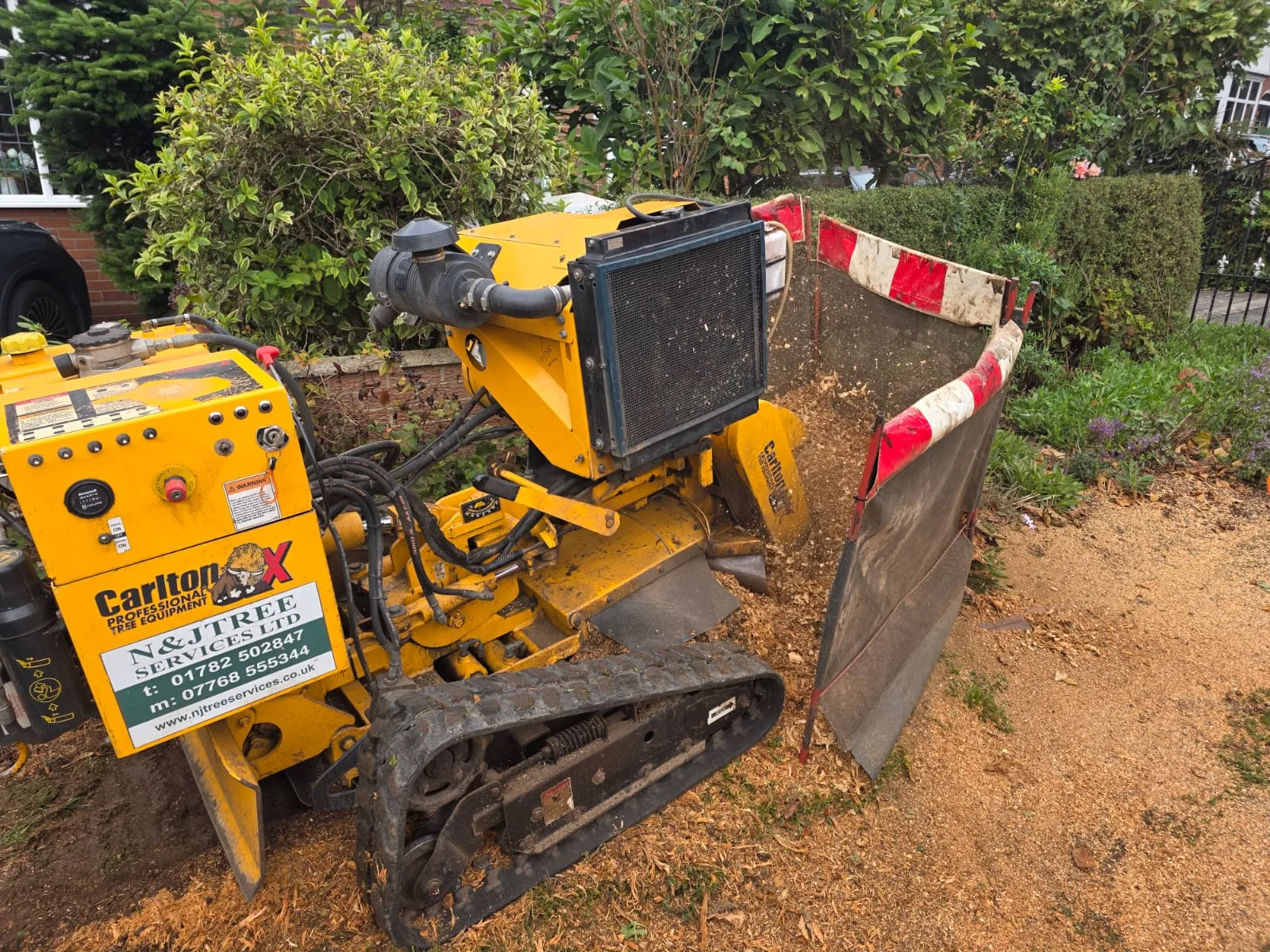
Clumber Avenue: Highway Verge Stump Grinding
Highway-verge stump grinding on Clumber Avenue, completed after utility-plan checks and CAT and Genny scanning.
View case study ↗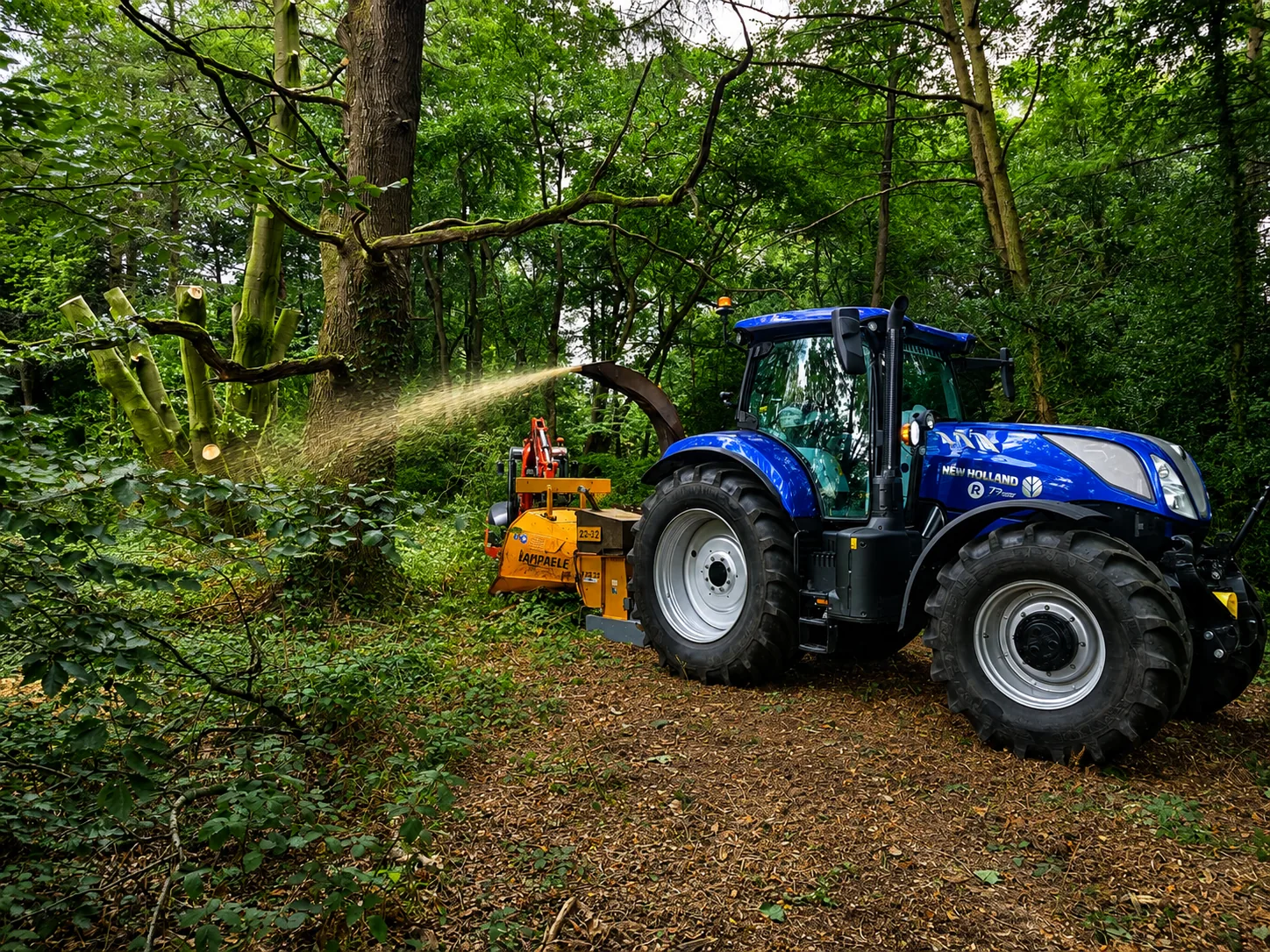
Commercial Tree & Vegetation Management
Survey-led tree safety works at Cicely Haughton, including veteran Beech reduction, sonic tomography and habitat retention.
01 / Project overview
Following a recent tree safety survey at Cicely Haughton, Wetley Rocks, a programme of remedial arboricultural works was identified to address a number of defects across the site.
The recommendations varied according to the condition, location and risk associated with each tree. Works included removing significant deadwood over the adjacent highway, removing snapped and defective limbs, further investigation using sonic tomography, fungal sampling and laboratory analysis, and the felling and reduction of defective trees.
Where appropriate, trees were retained and managed for their ecological value rather than removed completely. This included creating standing monoliths to provide valuable future habitat.
One of the most significant trees identified during the survey was a veteran Beech situated within a wooded area adjacent to the highway.
The tree displayed several significant defects, including an included union, the presence of Ganoderma fungal fruiting bodies and advanced decline within the crown. It also had considerable canopy weight extending towards the highway.
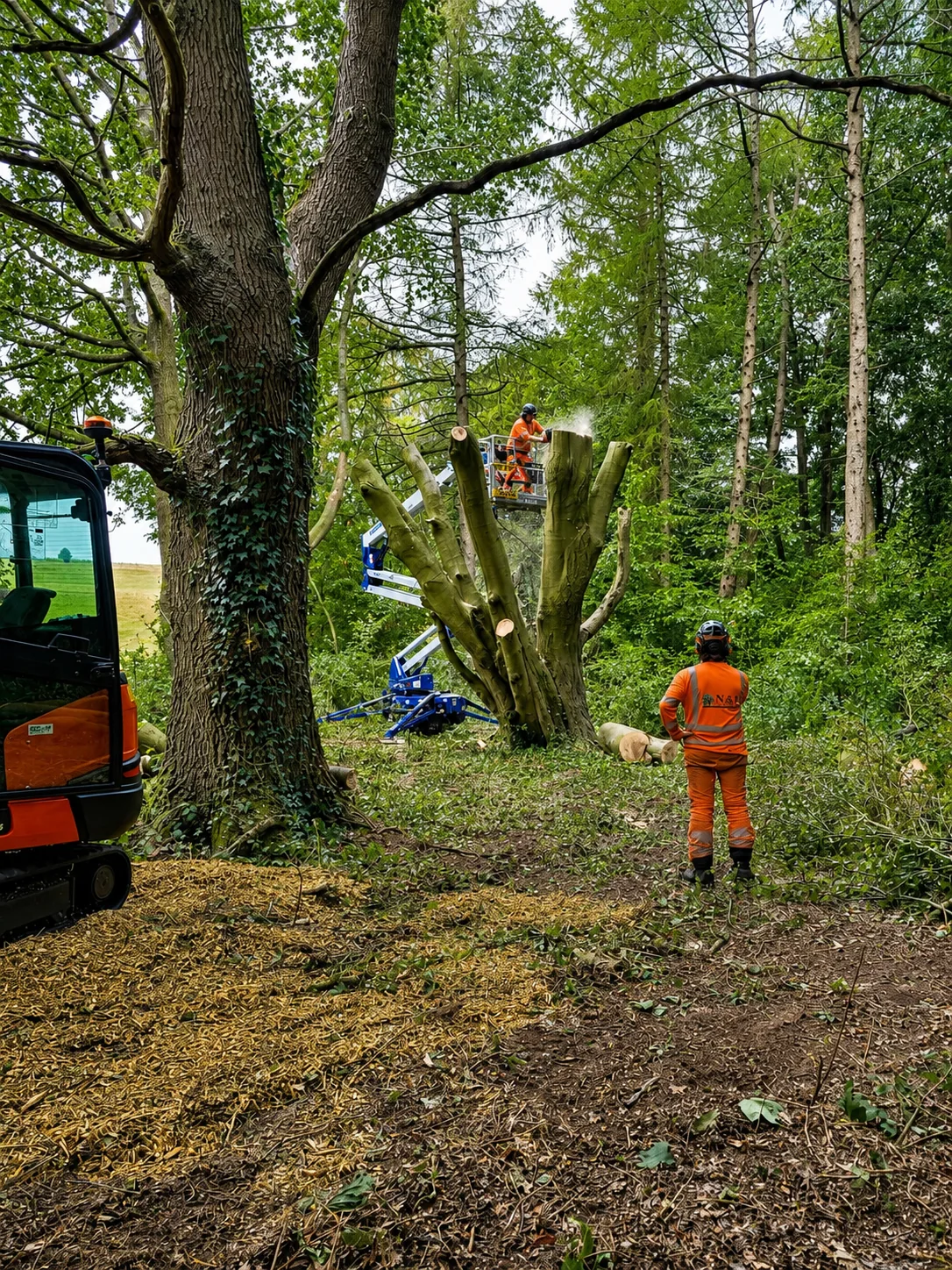
Taking into consideration the tree's condition, its proximity to the highway and its veteran habitat value, complete removal was not considered the preferred management option. Instead, the Beech was reduced to an approximately seven-metre standing monolith.
This significantly reduced the potential loading and consequences associated with structural failure while allowing the main stem to be retained as valuable standing deadwood habitat.
Careful planning was required because the works were within a wooded area alongside the main access route serving the school and neighbouring properties.
N&J's team used a 21m tracked spider MEWP, supported by an excavator fitted with a timber grab, a tractor and a PTO woodchipper. This combination of specialist equipment allowed the works to be undertaken efficiently from within the site without unnecessarily occupying or disrupting the adjacent highway.
The 21m spider MEWP provided a controlled method of accessing the defective Beech and other trees within the wooded area. The excavator and timber grab enabled larger sections of timber to be handled and processed with minimal manual handling.
Elsewhere across the site, the arboricultural teams completed the specified remedial works while further investigations were undertaken on trees where additional information was required.
This included sonic tomography to assess internal stem condition and the collection of fungal samples, which were sent to a specialist laboratory for identification and analysis.
The programme combined visual tree assessment, advanced diagnostic testing, laboratory analysis, specialist arboricultural operations and habitat retention.
Rather than adopting a blanket approach of removing defective trees, each tree was managed according to its individual condition, risk and ecological value.
The project was delivered while balancing public safety, operational efficiency and the retention of valuable habitat features.
02 / Project considerations
03 / Planning, safety & project controls
See how access, public protection, ecology, equipment selection and emergency arrangements influenced the delivery approach. Detailed project documents are supplied through the relevant tender or mobilisation process.
Each tree was managed according to its individual condition, location, risk and ecological value.
The veteran Beech was reduced to an approximately seven-metre standing monolith rather than removed completely.
A 21m tracked spider MEWP provided controlled access to the Beech and other defective trees within the wooded area.
An excavator with a timber grab, tractor and PTO woodchipper supported mechanical handling and processing from within the site.
Sonic tomography assessed internal stem condition, while fungal samples were sent to a specialist laboratory for identification and analysis.
05 / Photo gallery
Other case studies
Specialist Plant & Mechanised Arboriculture
Highway-verge stump grinding on Clumber Avenue, completed after utility-plan checks and CAT and Genny scanning.
View case study ↗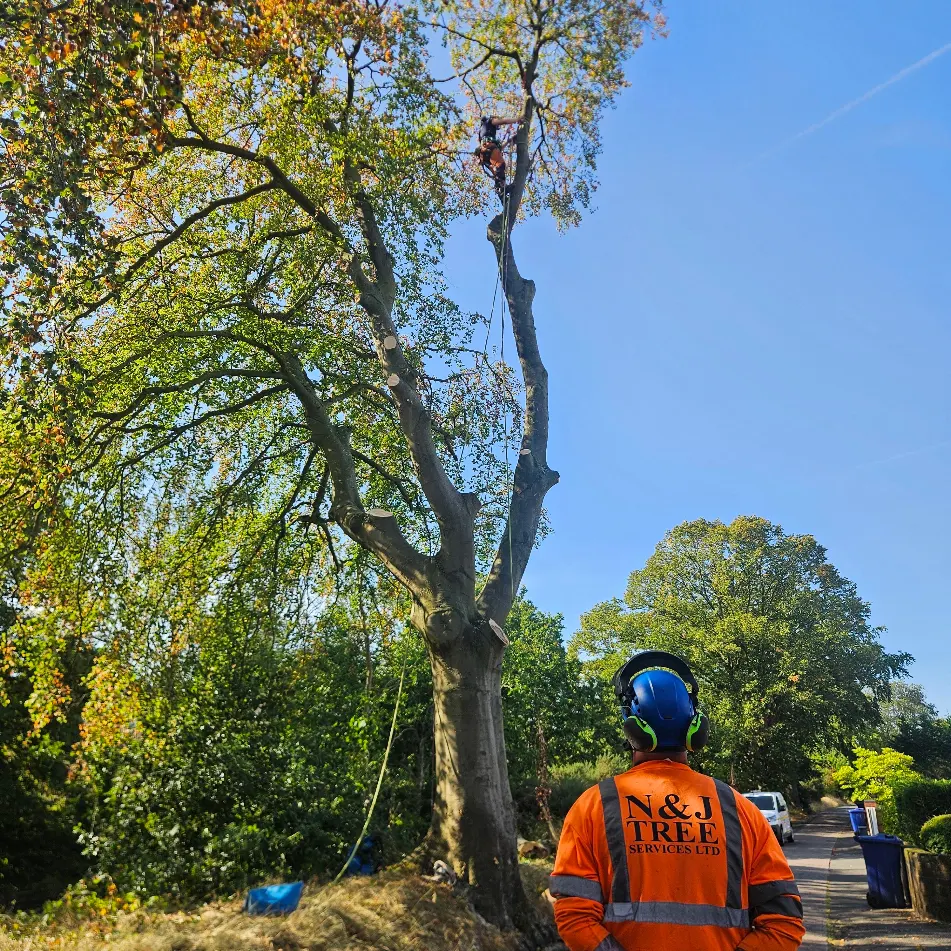
Tree Removal & Tree Surgery
Removal of four mature safety-critical trees at Priory Road following ongoing inspection and monitoring.
View case study ↗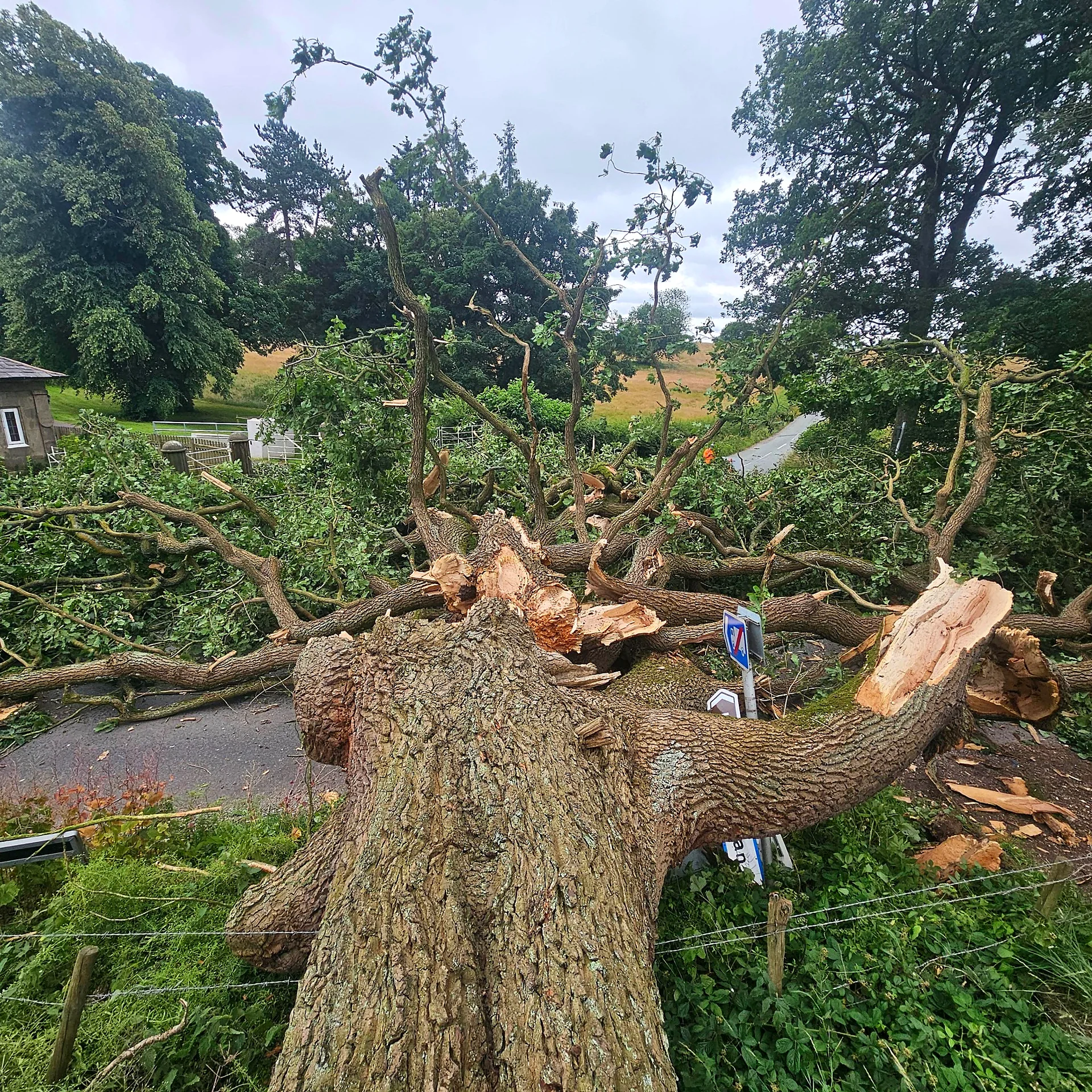
24/7 contract emergency response
Emergency removal of a mature fallen oak from Hollington Road, combining site-specific risk control with mechanical timber handling.
View case study ↗Start a project conversation
Share the location, programme, required service and known constraints. The team can then route the conversation appropriately.